

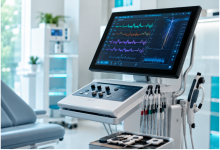
Muscular Dystrophy Diagnosis and Long-Term Care
Specialist care for diagnosed or suspected muscular dystrophy, including progressive weakness, mobility changes, falls, stiffness, and breathing or swallowing concerns.
Muscular Dystrophy Can Affect Different Muscles at Different Ages
Muscular dystrophy includes genetic muscle disorders that cause progressive weakness, with symptoms varying by type and age.
Common symptoms may include:
- Gradually worsening muscle weakness
- Frequent falls or difficulty rising
- Trouble running, climbing, or lifting
- Waddling gait or walking on toes
- Shoulder, hip, hand, or facial weakness
- Muscle stiffness or joint contractures
- Swallowing, breathing, or heart concerns
Progressive weakness deserves a specialist evaluation.
Muscular Dystrophy Care Led by a Neuromuscular Specialist
Dr. Samir P. Macwan is ABPN Board Certified in both Neurology and Neuromuscular Medicine. He has practiced Neuromuscular Medicine in the Greater Palm Springs area for 15 years and evaluates progressive muscle weakness and neuromuscular conditions, including muscular dystrophy.
Why this matters for muscular dystrophy patients:
- Muscular dystrophy includes many genetically distinct muscle diseases
- Symptoms vary by subtype, age, and affected muscles
- Diagnosis may require genetic and specialized muscle testing
- Care should consider mobility, breathing, swallowing, and heart health
Testing Identifies the Muscular Dystrophy Type and Care Needs
Evaluation may include a neurologic examination, family history, muscle enzyme blood tests, genetic testing, EMG, heart and breathing assessments, or muscle biopsy when needed. Care may include subtype-specific medication, rehabilitation, stretching, mobility support, respiratory care, heart monitoring, swallowing support, or genetic counseling.
Treatment decisions may depend on:
- Pattern and age of symptom onset
- Family history and genetic findings
- Muscle strength and daily function
- Heart or breathing involvement
- Swallowing and mobility needs
- Eligibility for subtype-specific treatment
Care Planning Must Match the Muscular Dystrophy Type
There is no single treatment plan for every muscular dystrophy. Some types have targeted therapies based on confirmed genetic changes, while others require care focused on maintaining movement, limiting contractures, monitoring breathing and heart function, and supporting daily independence.
Care planning may include physical or occupational therapy, mobility equipment, respiratory support, cardiac care, swallowing assessment, genetic counseling, and coordination with additional specialists based on the diagnosis.
Know When Muscular Dystrophy Symptoms Need Urgent Care
Severe breathing, swallowing, cardiac, or sudden functional changes may require immediate emergency evaluation.

Dr. Samir P. Macwan
MD
Seek urgent help for:
- Severe or sudden breathing difficulty
- Choking or inability to swallow safely
- Blue lips or extreme drowsiness
- Chest pain, fainting, or rapid heartbeat
- Inability to clear mucus or secretions
- Sudden major loss of movement
- Serious injury following a fall
Call 911 for Severe Symptoms
Call 911 for severe breathing, choking, chest pain, fainting, or sudden major weakness.
Muscular Dystrophy FAQs
What are the first signs of muscular dystrophy?
Early signs may include progressive muscle weakness, frequent falls, difficulty rising from the floor, trouble climbing stairs, delayed walking, toe walking, or a waddling gait. Other symptoms depend on the type and may involve the face, shoulders, hands, swallowing muscles, breathing muscles, or heart.
What are the different types of muscular dystrophy?
Muscular dystrophy includes Duchenne, Becker, myotonic, limb-girdle, facioscapulohumeral, congenital, distal, oculopharyngeal, and Emery-Dreifuss muscular dystrophy. Each type has a different genetic cause, age of onset, progression pattern, and group of muscles most likely to be affected.
How is muscular dystrophy diagnosed?
Diagnosis begins with symptom history, family history, a neurologic examination, and muscle-strength testing. Evaluation may include creatine kinase blood testing, genetic testing, EMG, heart or breathing assessments, and sometimes muscle biopsy. The exact testing depends on the suspected muscular dystrophy type and clinical findings.
What treatments are used for muscular dystrophy?
Treatment depends on the muscular dystrophy type and may include medications, subtype-specific therapies, physical or occupational therapy, stretching, braces, mobility equipment, respiratory support, heart treatment, swallowing care, or surgery. Some targeted treatments are available only for patients with specific confirmed genetic changes.
Can muscular dystrophy begin in adulthood?
Yes. Some muscular dystrophies begin during infancy or childhood, while others may not appear until adolescence or adulthood. Myotonic, limb-girdle, facioscapulohumeral, distal, Becker, and oculopharyngeal muscular dystrophies may present later, depending on the specific subtype and genetic change.
Can muscular dystrophy affect breathing or heart function?
Yes. Some muscular dystrophy types weaken breathing muscles or affect the heart muscle and rhythm. Monitoring may include breathing tests, sleep evaluation, cardiac imaging, or heart-rhythm testing. Severe breathing difficulty, choking, chest pain, fainting, or blue lips requires immediate emergency attention.