

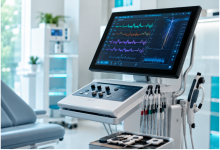
Advanced Infusion Therapy for Neuromuscular Conditions
Specialist evaluation for IVIG, rituximab, eculizumab, VYVGART, ULTOMIRIS, RYSTIGGO, and ZILBRYSQ in eligible patients with autoimmune neuromuscular conditions.
Infusion Treatments Require Careful Selection and Ongoing Monitoring
Infusion and injectable therapies affect different immune pathways and may be considered when symptoms remain active, disabling, or insufficiently controlled.
Treatment may be considered when:
- A neuromuscular diagnosis is confirmed
- Symptoms remain active or disabling
- Standard medications are not effective
- Previous treatment causes limiting side effects
- Antibody status meets therapy requirements
- Short-term stabilization is clinically needed
- Expected benefits outweigh treatment risks
The right therapy depends on the condition, treatment history, and overall health.
Infusion Therapy Led by a Neuromuscular Specialist
Dr. Samir P. Macwan is ABPN Board Certified in both Neurology and Neuromuscular Medicine. He has practiced Neuromuscular Medicine in the Greater Palm Springs area for 15 years and has been involved in research of Myasthenia Gravis, CIDP, Multifocal Motor Neuropathy and Inflammatory Myositis.
Why this matters for infusion patients:
- Each therapy targets a different immune pathway
- Eligibility may depend on diagnosis and antibody status
- Vaccination, infection screening, or laboratory testing may be required
- Treatment response and side effects require ongoing review
Treatment Selection and Monitoring Built Around Your Needs
Evaluation may include confirming the diagnosis, reviewing antibody results, assessing symptom severity, checking prior treatment response, reviewing vaccinations, and completing laboratory or infection screening. Treatment may include IVIG, rituximab, eculizumab, VYVGART, ULTOMIRIS, RYSTIGGO, ZILBRYSQ, or another therapy when clinically appropriate.
Treatment decisions may depend on:
- Confirmed diagnosis
- Antibody status
- Severity and pattern of symptoms
- Previous treatment response
- Infection and vaccination history
- Medical history and eligibility
Advanced Infusion Care Backed by Research Experience
Southland Neuromuscular is involved in research-connected care for complex neuromuscular conditions. Dr. Macwan has served as Principal Investigator for ongoing and completed clinical trials involving generalized Myasthenia Gravis, inflammatory myopathy, CIDP, Multifocal Motor Neuropathy, IVIG, and related therapies.
For eligible patients, care discussions may include established infusion therapy, disease-specific treatment, advanced injectable medication, or clinical trial evaluation based on diagnosis, medical history, previous response, and clinical fit.
Know When Treatment Reactions Need Urgent Care
Severe allergic reactions, infection symptoms, chest pain, neurologic changes, or rapidly worsening weakness during or after treatment require urgent medical attention.

Dr. Samir P. Macwan
MD
Seek urgent help for:
- Trouble breathing
- Facial or throat swelling
- Chest pain or fainting
- Fever with severe headache
- Confusion or a stiff neck
- Sudden weakness or severe dizziness
- Rapidly worsening swallowing or breathing weakness
Call 911 for Severe Symptoms
Call 911 for breathing difficulty, facial or throat swelling, chest pain, fainting, confusion, or rapidly worsening weakness.
Infusion Therapy FAQs
What conditions may be treated with infusion therapy?
Infusion therapy may be considered for Myasthenia Gravis, CIDP, Multifocal Motor Neuropathy, inflammatory myopathy, and other immune-mediated neuromuscular conditions. The appropriate therapy depends on diagnosis, symptom severity, antibody results, prior treatment response, medical history, and medication-specific eligibility.
Are all these treatments given by intravenous infusion?
No. IVIG, rituximab, eculizumab, ULTOMIRIS, and intravenous VYVGART are given through a vein. RYSTIGGO is administered as a subcutaneous infusion, while ZILBRYSQ is given as a subcutaneous injection. The schedule and treatment location depend on the prescribed medication.
How is the right infusion treatment selected?
Treatment selection begins with confirming the diagnosis and reviewing symptoms, antibody status, previous therapies, laboratory results, vaccination history, infection risks, and other medical conditions. Some treatments are approved only for specific diagnoses or antibody groups, while rituximab may be considered off-label in selected situations.
What testing is needed before treatment?
Pre-treatment evaluation may include blood counts, kidney or liver testing, infection screening, antibody testing, and vaccination review. Requirements vary by medication. Complement inhibitors require meningococcal risk management, while rituximab commonly requires hepatitis B screening before treatment begins.
How long does infusion therapy take to work?
Response time varies by medication, diagnosis, disease severity, and patient. Some people notice improvement during an early treatment cycle, while others need repeated treatment and monitoring before response can be judged. Treatment should be reviewed regularly for benefit, safety, and continued need.
What side effects can infusion therapy cause?
Possible effects include headache, fatigue, nausea, chills, fever, or injection-site reactions. More serious risks may include severe infusion reactions, infection, blood clots, kidney problems, or meningococcal disease with complement inhibitors. Patients should follow medication-specific safety instructions and report concerning symptoms promptly.